At a glance
- In this clear and practical guide, we'll explore the substantial differences between these two signing methods, helping you choose the one best suited to your business requirements.
- Electronic vs. Digital Signature: The Direct Answer
- The Practical Problem of Choice
- The Solution: Types of Electronic Signatures and Their Applications
- YouKont is a platform designed to simplify the management and signing of your digital documents, offering solutions that comply with regulations and are focused on practical usability.
Table of contents
- Electronic Signature vs. Digital Signature: The Direct Answer
- The Practical Problem of Choice
- The Solution: Types of Electronic Signatures and Their Applications
- Mistakes to Avoid When Choosing Your Signature
- When to Use a Software like YouKont for Your Signatures
- Limitations and Legal Considerations: A Brief Note
- Related Deep Dive
- FAQs
In this clear and practical guide, we'll explore the substantial differences between these two signing methods, helping you choose the one best suited to your business requirements.
YouKont is a platform designed to simplify the management and signing of your digital documents, offering solutions that comply with regulations and are focused on practical usability.
Electronic Signature vs. Digital Signature: The Direct Answer
To grasp the distinctions between electronic signatures and digital signatures, it's essential to start with the relevant regulations. In Europe, the eIDAS Regulation (electronic IDentification, Authentication and trust Services) establishes a clear hierarchy, distinguishing three types of electronic signatures:
Simple Electronic Signature (SES): This is the most basic form. It's any electronic data that is logically associated with other electronic data and used by the signatory to sign. Examples include typing your name in an email or clicking an "I accept" button on a website. Its evidential value is freely assessed by a judge, meaning the signatory must prove their identity and intent to sign in the event of a dispute.
Advanced Electronic Signature (AES): This offers a higher level of security. It must be uniquely linked to the signatory, capable of identifying them, created using means over which the signatory has exclusive control, and linked to the signed data in such a way that any subsequent alteration of the data can be detected. This type of signature guarantees greater authenticity and integrity of the document. It has the same legal value as a handwritten signature, except in the specific case of the registration of real estate transactions.
Qualified Electronic Signature (QES): This is the highest level of security and corresponds to what we call an “Italian digital signature”. It is an AES created by a qualified electronic signature creation device and based on a qualified certificate for electronic signatures. The certificate is issued by a qualified trust service provider (Certification Authority) and uniquely attests to the signatory's identity. The QES has full legal effect equivalent to a handwritten signature and reverses the burden of proof: it is up to the party disputing its authenticity to prove it is not authentic. For this reason, it is particularly suitable for documents requiring maximum legal certainty, such as important contracts or public administration documents.
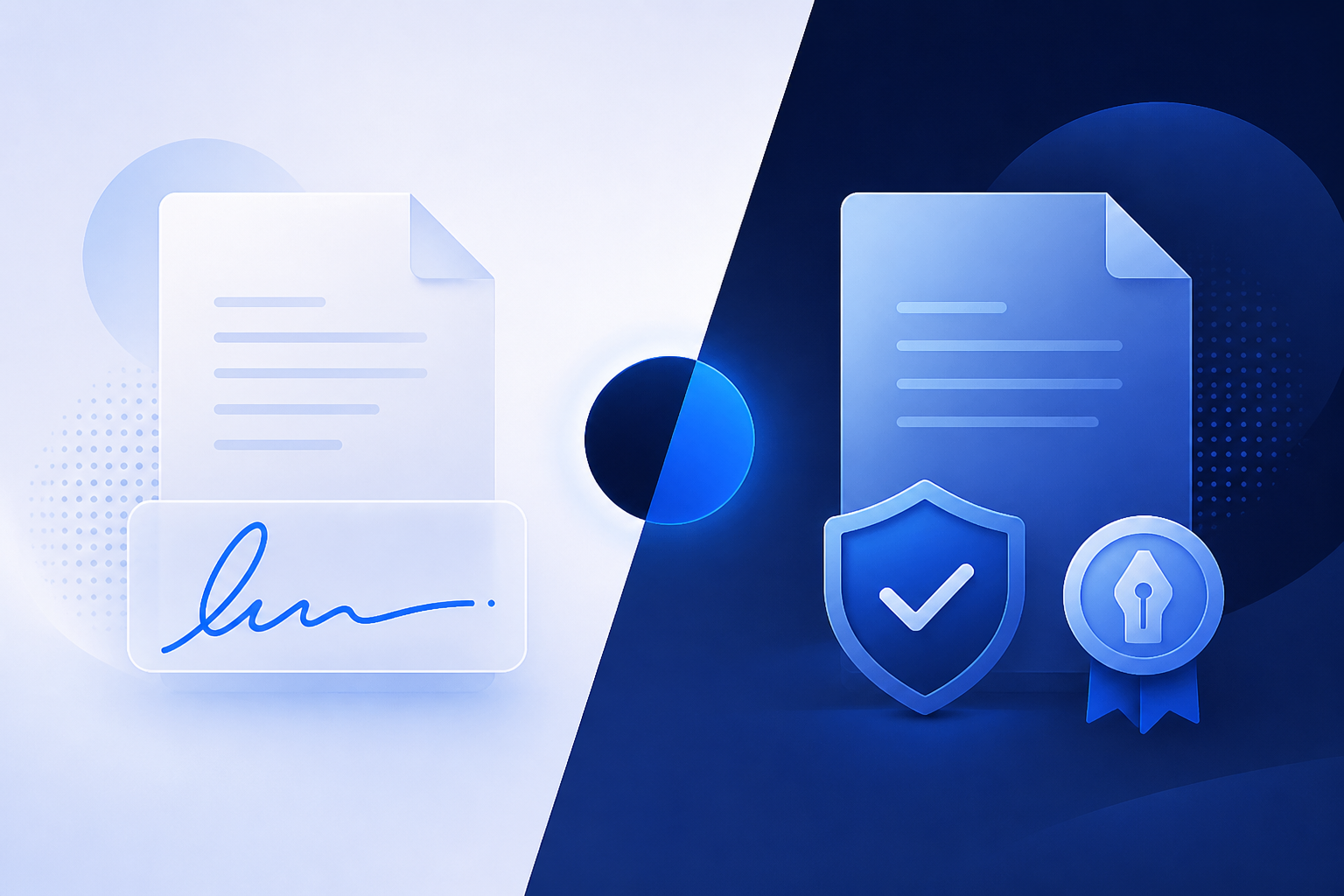
In summary, an electronic signature is the overarching category, which includes three different types: simple, advanced, and qualified. A digital signature is the specific term used in Italy for a Qualified Electronic Signature (QES), the type of signature with the highest legal value and the greatest guarantees. Understanding these distinctions is crucial for managing all types of documents, from the simplest to those requiring stringent legal validation, such as in Documents for short-term rental property managers.
The Practical Problem of Choice
The issue isn't just terminological. Choosing the wrong type of signature can lead to delays, legal challenges, and even the invalidation of contracts or agreements. Imagine signing an important contract with a Simple Electronic Signature, only to discover its validity is too weak in the event of a dispute. Or, conversely, using a Digital Signature for a document that only requires a simple confirmation, unnecessarily slowing down processes. A correct understanding of these differences is therefore a prerequisite for optimising workflows and ensuring legal certainty in your digital operations.
The Solution: Types of Electronic Signatures and Their Applications
Understanding which signature to use depends on the context and the legal weight required for the document.
When to use a Simple Electronic Signature (SES): For low-risk documents where a high degree of evidential robustness isn't required. Examples include accepting terms and conditions for an online service, confirming receipt of an email, or signing non-binding internal forms. It's the fastest and most cost-effective solution, but carries the highest risk in case of a dispute.
When to use an Advanced Electronic Signature (AES): Excellent for most commercial contracts between private parties, where a high degree of security is desired without the burden of a physical device. Think of service contracts, non-disclosure agreements, or accepted quotes. A perfect use case is signing a Lease agreement online.
When to use a Qualified Electronic Signature (QES) or Digital Signature: Essential for documents that require the utmost legal certainty, such as public deeds, contracts with public administrations, notarial acts (via a notary), company financial statements, or any document for which the law explicitly requires a written form ad substantiam. It offers maximum legal rigour and the presumption of validity.
The key is to balance the need for security with ease of use and cost. The 'strongest' signature isn't always the best if a more agile alternative is sufficient and legally valid for your specific use case.
Mistakes to Avoid When Choosing Your Signature
Several mistakes can compromise the effectiveness and validity of your digital signatures. Here are the most common ones:
- Confusing terminology: As we've seen, not all 'electronic signatures' are created equal. Using 'digital signature' synonymously with SES is a serious error that can lead to underestimating the necessary level of security.
- Underestimating legal value: Assuming that a simple confirmation email holds the same weight as a Qualified Electronic Signature (QES) is risky. Always assess the legal significance of the document and the consequences of it being challenged.
- Failing to verify the signatory's identity: Especially with SES, the signatory's identity can easily go unverified through stringent means. In the cases of AdES and QES, identification processes are much more rigorous and guaranteed.
- Using non-compliant solutions: Relying on tools that do not comply with the eIDAS Regulation can render your signatures legally invalid. Ensure that your signature service provider is accredited and compliant.
- Ignoring compliant archiving: An electronically signed document is only valid if properly archived, ensuring its integrity and readability over time. Compliant digital archiving is as crucial as the signature itself.
When to Use a Software like YouKont for Your Signatures
When to use
- Digitalisation of processes: If you're looking to go paperless and speed up operations, a platform that integrates different types of electronic signatures is crucial.
- Need for various signature types: YouKont allows you to choose the most suitable signature for each document, from simple acceptance to qualified signatures, without having to switch platforms.
- Collaboration and traceability: For teams working together on documents who need to track every step, from creation to signing, right through to archiving. Every action is recorded, providing a complete audit trail.
When to avoid
- Security and compliance: Ensuring all signatures comply with the eIDAS Regulation and Italian regulations is crucial, especially in regulated sectors. YouKont is designed to adhere to these standards, providing legal robustness to your documents.
- Reduce costs and time: Eliminating printing, shipping, and physical archiving of documents results in significant savings in resources and time. Centralised management also simplifies document retrieval and recovery.
Limitations and Legal Considerations: A Brief Note
Despite the undeniable convenience and legal validity of electronic signatures, it's always worth remembering that in a few specific contexts, Italian law still requires a handwritten signature or equivalent methods (such as a Qualified Electronic Signature) for the ad substantiam validity of certain acts, such as property deeds. It is always advisable to consult a legal professional if you have any doubts about the most suitable type of signature for particularly significant or complex acts.
FAQs
Frequently asked questions
What is the main difference between an electronic signature and a digital signature?
Electronic signature is the general term encompassing three categories (simple, advanced, and qualified). Digital signature is the specific Italian term for a Qualified Electronic Signature (QES), the type of signature with the highest legal value and the most regulatory guarantees.
Does a Simple Electronic Signature have legal validity?
Yes, a Simple Electronic Signature (SES) has legal validity but with probative value freely assessable by a judge. This means that, in the event of a dispute, the party invoking it will have to prove its authenticity and the intention to sign.
When should I use a Digital Signature (QES)?
A Digital Signature (QES) is required when the document demands the highest legal certainty, such as public deeds, contracts with Public Administrations, notarial acts, or any act for which the law explicitly provides for a written form 'ad substantiam' (under penalty of nullity) or equates the signature of the electronic document to an authenticated private writing.
Can I sign an important contract with an Advanced Electronic Signature (AES)?
Yes, an Advanced Electronic Signature (AES) has the same legal value as a handwritten signature (except for acts that explicitly require a QES). It is widely used for commercial contracts between private parties, ensuring high security and signatory identification.
From scattered PDFs to signed, tracked documents
Understanding the differences between electronic and digital signatures is the first step towards more efficient and legally secure document management. Discover how YouKont can help you sign, manage, and store your documents in a compliant and intuitive way, simplifying your daily operations.
Start free for 14 daysNo credit card required.
Keep reading
How to Sign a PDF Online for Free (2026 Guide)YouKont editorial team
Written by the YouKont team to help SMBs, sales teams and professionals better understand digital document management and simple electronic signatures (SES).
This guide is for informational purposes only and does not replace legal advice.