At a glance
- In this article, we'll explore in detail the differences between electronic and digital signatures, their legal validity, and guide you in making the most appropriate choice.
- Electronic vs. Digital Signature: The Fundamental Distinction
- Different Types of Electronic Signatures According to eIDAS Regulation
- When to Use a Simple Electronic Signature (SES)
- Understanding these distinctions is fundamental for any professional managing documentation, and we at YouKont are here to simplify the management of your document processes.
Table of contents
- Electronic Signature vs. Digital Signature: The Fundamental Distinction
- The different types of electronic signatures according to the eIDAS regulation
- When to Use a Simple Electronic Signature (SES)
- When is an Advanced Electronic Signature (AES) or Qualified Electronic Signature (QES)/Digital Signature required?
- Digital Signature: The Highest Legal Guarantee
- The Practical Problem of Document Management Without Digital Signatures
- The solution: digitisation with the right signature
- Common Pitfalls to Avoid When Choosing and Using Electronic Signatures
- When to use software like YouKont for signature management
- Limitations and Legal Considerations: Not All Signatures Are Created Equal
- Related Deep Dive: Choosing the Right E-Signature Software
In this article, we'll explore in detail the differences between electronic and digital signatures, their legal validity, and guide you in making the most appropriate choice.
Understanding these distinctions is fundamental for any professional managing documentation, and we at YouKont are here to simplify the management of your document processes.
Electronic Signature vs. Digital Signature: The Fundamental Distinction
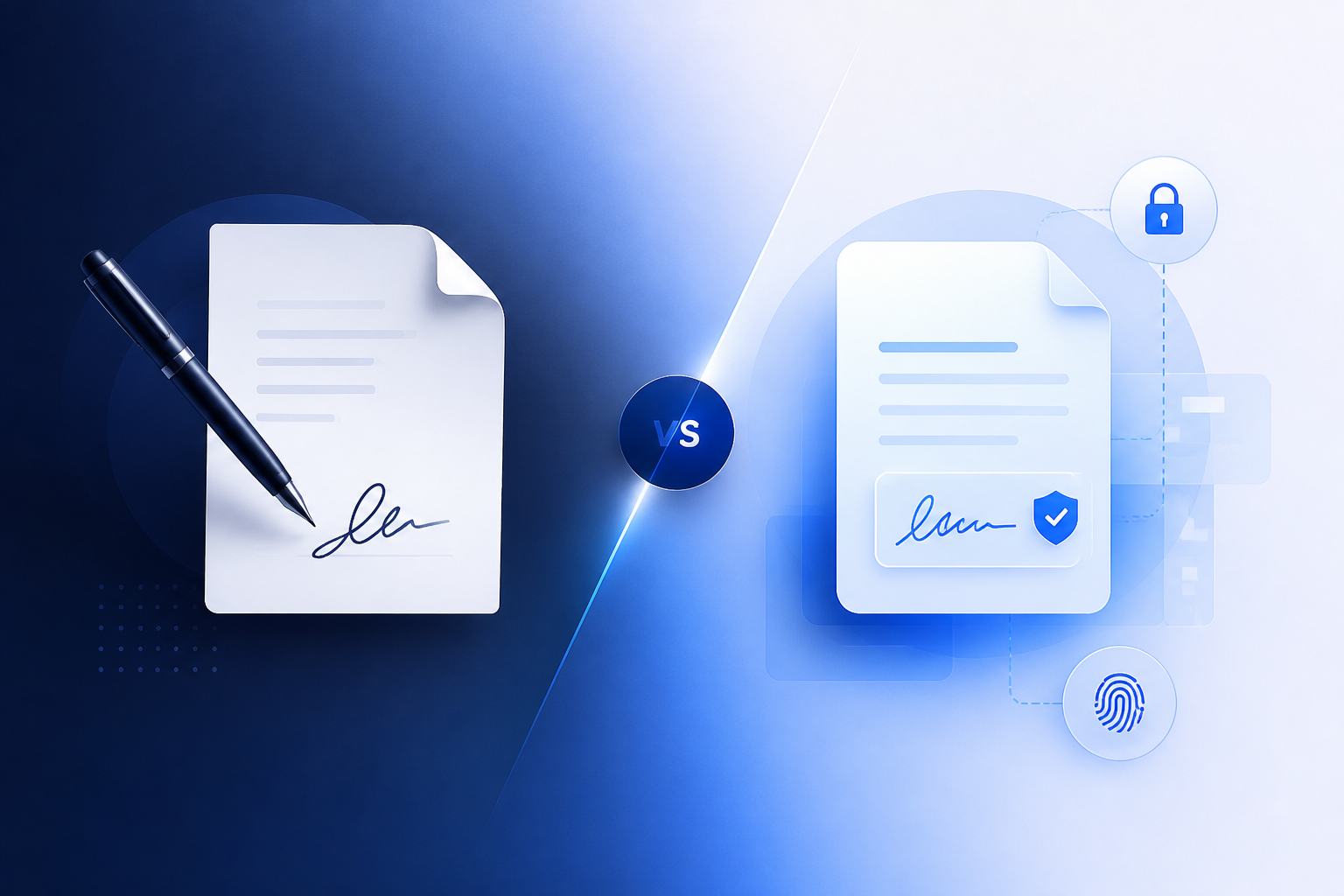
In everyday language, the terms "electronic signature" and "digital signature" are often used interchangeably. However, from a regulatory perspective, particularly under the European Union's eIDAS Regulation (electronic IDentification, Authentication and trust Services), a well-defined hierarchy exists that assigns a different level of security and legal validity to each.
Electronic Signature
The electronic signature is a broad concept that includes any data in electronic form which is attached to or logically associated with other electronic data and which is used by the signatory to sign. This could be a scanned image of a handwritten signature, a click on an 'I Accept' button, or a more complex form involving the identification of the signatory. It is an umbrella term encompassing various types.
Digital Signature
The digital signature, conversely, is one of the most robust and secure types of electronic signature. It is based on an asymmetric cryptography system and a qualified certificate issued by a trusted service provider. Its uniqueness lies in guaranteeing the authenticity of the signatory, the integrity of the document, and non-repudiation. In Italy, the digital signature is legally equivalent to a handwritten signature.
To give a practical example, consider managing documents for property managers of short-term rentals. Collecting signatures on contracts, handover reports, or guest registers can occur in different ways. For some less critical documents, a simple electronic signature might suffice, but for high-value tenancy agreements or those with complex legal implications, a digital or a qualified signature offers superior protection.
The different types of electronic signatures according to the eIDAS regulation
The eIDAS regulation defines three main types of electronic signatures, based on their security level and their ability to identify the signatory and guarantee document integrity:
Simple Electronic Signature (SES): This is the most basic form. It can be a name typed at the end of an email, a PIN, a checkbox in an online form, or a scanned image of a handwritten signature. SES has legal validity, but the burden of proof in the event of a dispute lies with the party invoking it to demonstrate its authenticity.
Advanced Electronic Signature (AES): This signature must meet more stringent requirements. It must be uniquely linked to the signatory, be capable of identifying them, be created using means that the signatory can exclusively control, and be linked to the data to which it relates in such a way that any subsequent alteration can be detected. An example is a biometric signature, captured on a tablet, which records the signatory's biometric data.
Qualified Electronic Signature (QES): This is the most secure type, equivalent to a handwritten signature with maximum legal validity. It is created using a qualified electronic signature creation device and is based on a qualified certificate for electronic signatures issued by a qualified trust service provider. The Digital Signature falls entirely into this category, representing the most common QES in Italy.
When to Use a Simple Electronic Signature (SES)
When to use
- Internal company communications
- Informational documents or non-binding authorisations
When to avoid
- Low-value financial contracts, where validity is supported by the context in which it was applied and by agreement between the parties
When is an Advanced Electronic Signature (AES) or Qualified Electronic Signature (QES)/Digital Signature required?
For documents with significant or high legal value, it is advisable to use an AES, or preferably, a QES (which leads to a Digital Signature).
An AES is suitable for contracts that require more robust signatory identification and document integrity, without the legal presumption of a Digital Signature. Examples include certain types of banking or insurance contracts, where the graphical signature process is often employed.
A QES / Digital Signature is the ideal choice for all situations where maximum legal certainty, enforceability against third parties, and full validity equivalent to a wet-ink signature are required. This includes:
- High-value economic contracts
- Documents for Public Administrations
- Public electronic deeds
- Real estate contracts (excluding definitive sales in Italy for now)
Digital Signature: The Highest Legal Guarantee
As we've seen, the Digital Signature is a specific type of Qualified Electronic Signature. In Italy, it is regulated by the Digital Administration Code (CAD), which grants it full legal validity, equating it to a handwritten signature.
The fundamental principles of a Digital Signature are:
- Authenticity: Guarantees the signatory's identity.
- Integrity: Ensures the document has not been altered after signing.
- Non-repudiation: The signatory cannot deny their signature.
To apply a Digital Signature, you need a signature kit, which includes a qualified certificate (often on a smart card or USB token) and signature software. The process requires entering a PIN or password to validate the operation.
The Practical Problem of Document Management Without Digital Signatures
Without a clear and legally valid system for signing documents, businesses and professionals face several challenges:
- Inefficiency: Printing, manual signing, scanning, and physical archiving are slow and costly processes.
- Errors and Loss: Physical documents are more prone to human error, loss, or damage.
- Legal Risks: Using inappropriate signatures can lead to disputes over contract validity, resulting in lost time and legal resources.
- Collaboration Difficulties: Managing remote signatures becomes complicated, slowing down the closure of important agreements.
The solution: digitisation with the right signature
The solution lies in adopting a conscious and structured approach to digitising signature processes, choosing the most suitable signature type for each document and context. Utilising platforms that integrate various signature options, from simple to qualified, helps optimise time and costs, while simultaneously ensuring full legal validity where required.
For example, for a Lease agreement online aimed at end-users, the choice of signature (advanced electronic or qualified) will become crucial for its enforceability. Software that allows managing all these aspects, from contract upload to signature collection, and secure archiving, significantly simplifies professional life.
Common Pitfalls to Avoid When Choosing and Using Electronic Signatures
To avoid legal or operational issues, it's crucial to steer clear of these common pitfalls:
- Underestimating the required security level: Not all electronic signatures are created equal. Using a Simple Electronic Signature (SES) when a Qualified Electronic Signature (QES) is needed can invalidate a contract in the event of a dispute.
- Confusing digital signature with simple electronic signature: Scanning a handwritten signature or typing your name into a text field does not carry the same legal and probative weight as a digital signature.
- Ignoring the context of use: The validity of a signature is often linked to the context in which it's applied and the agreement between the parties. A click on 'I Accept' can be legally binding if it's part of a well-defined and recognised process.
- Failing to verify the signatory's identity: Even with SES, it's good practice to implement mechanisms that link the signature to a specific individual, for example, through two-factor authentication or IP address tracking.
When to use software like YouKont for signature management
When to use
- Choose the right signature: By integrating various types of signatures (from simple to qualified), you can apply the most suitable one for your specific use case, ensuring compliance and legal validity.
- Process automation: From document preparation and sending for signature, through to archiving, all steps are seamless and automatic.
- Traceability and audit trail: Every action on the document is recorded, providing irrefutable proof of the signing process.
When to avoid
- Accessibility and collaboration: You can sign and have documents signed wherever you are, facilitating collaboration with clients and partners.
- Security: Your documents are protected by advanced encryption and high security measures.
Limitations and Legal Considerations: Not All Signatures Are Created Equal
It's crucial to remember that while digitisation offers immense benefits, the choice of electronic signature must be made with due diligence. There isn't a universal solution, and the legal validity of a signature can be contested if it doesn't meet the specific requirements for the type of document or transaction. The advice is always to assess the associated risk and consult legal experts if you have any doubts about particularly complex or high-value financial documents.
Frequently asked questions
What is the main difference between electronic signature and digital signature?
Electronic signature is a broad concept that includes any electronic data used to sign. Digital signature is a specific type of qualified electronic signature, based on cryptography and certificates, offering the highest level of security and legal validity, equivalent to a handwritten signature.
Does a simple electronic signature have legal value?
Yes, a simple electronic signature has legal value but with a higher burden of proof. In case of dispute, it is up to the party invoking it to prove its authenticity and probative value.
When should I use a digital signature?
You should use a digital signature (or a qualified electronic signature) whenever the highest legal guarantee, enforceability against third parties, and equivalence to a handwritten signature are required. Typically, for high-value contracts, documents for public administration, or important legal acts.
Is an image of a handwritten signature a digital signature?
No, an image of a handwritten signature is a form of simple electronic signature (SES), with lower probative value and more easily contested than a digital signature, which requires a specific cryptographic process and a qualified certificate.
From scattered PDFs to signed, tracked documents
Do you want to simplify your document management and ensure the legal validity of your signatures? Discover YouKont's features and transform your signing processes.
Start free for 14 daysNo credit card required.
Keep reading
Checklist for Choosing Document Signing SoftwareYouKont editorial team
Written by the YouKont team to help SMBs, sales teams and professionals better understand digital document management and simple electronic signatures (SES).
This guide is for informational purposes only and does not replace legal advice.